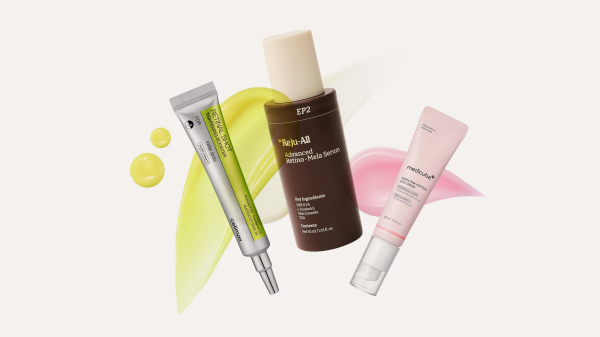
 Collage: Paula Balondo; Source images: Courtesy of Allure editors and brandsSave this storySave this story
The best Korean retinols may be especially appealing if you’ve ever been curious about retinol and its benefits—increased cell turnover and amped-up collagen production—but nervous about waking up with flaky or angry skin. While retinoids have a reputation for causing peeling, redness, and irritation, Korean skin-care formulas tend to take a gentler approach. “The retinol molecule itself is not different, but Korean retinol products are more focused on tolerability and protecting the skin barrier, which is geared to improve adherence,” says Jane Yoo, MD, a dual board-certified dermatologist and Mohs surgeon based in New York City.
In other words, the philosophy isn’t necessarily about pushing the highest percentage possible, but about creating retinoid formulas you can use consistently. As a result, many K-beauty formulas hover around 0.1% retinol, while Western formulas more commonly start around 0.25% and climb from there. That’s why many of the best retinols for sensitive skin now come from K-beauty brands.
Our Top Korean Retinol Products
- Best Overall: Celimax The Vita A Retinal Shot Tightening Booster, $24
- Best Serum: IOPE Expert Retinol Rx 1% Super Bounce Serum, $49
- Best Toner Pads: Innisfree Daily Gentle Retinol Salicylic Toner Pads, $28
- Best for Advanced Users: Dr. Reju-All Advanced Retino-Mela Serum HPR Retinol Serum, $32
On top of using smaller doses of retinoids, Korean retinols also pair the active with soothing, barrier-supporting ingredients like Centella asiatica (a.k.a. cica), ceramides, panthenol, and hydrating humectants. They also often emphasize encapsulation or slow-release delivery systems designed to minimize irritation. But just because they’re more sensitive skin-friendly doesn’t mean they skimp on results—our editors and dermatologists share the Korean retinols they swear by for smoother, brighter, firmer-looking skin.
Frequently Asked QuestionsLargeChevron
- What’s the most common form of retinol in K-beauty?
- If a product doesn’t list a retinol percentage, how can you tell how strong it is?
- Do you still need sunscreen in the morning with Korean retinol?
- Meet the experts
- How we test and review products
- Our staff and testers
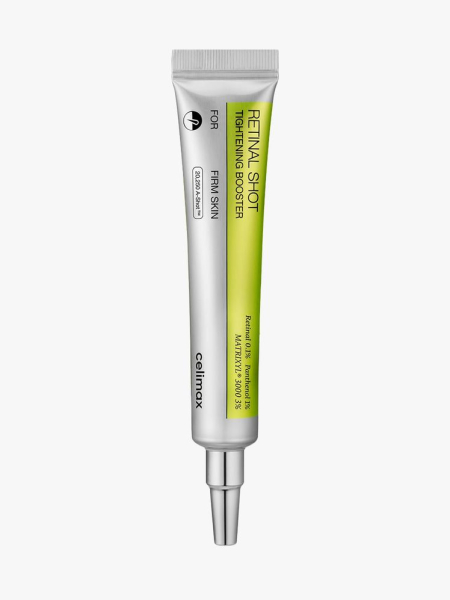
Best Overall: Celimax The Vita A Retinal Shot Tightening Booster
 Save to wishlist
Celimax
The Vita A Retinal Shot Tightening Booster
Amazon
Ulta Beauty
Yesstyle
Why it’s worth it: First, a quick disclaimer: Celimax’s The Vita A Retinal Shot Tightening Booster is a retinoid product that’s better suited for someone who already has a little experience under their belt. Instead of traditional retinol, it uses 0.1% retinal (retinaldehyde), a vitamin A derivative that works faster because it’s only one conversion step away from retinoic acid—the form your skin actually uses. (It’s also thought to be gentler than retinol.) But what really gives the formula its edge is the K-beauty-style delivery system: The brand pairs retinal with hydrolyzed sponge (tiny spicule-like structures that encourage ingredients to penetrate more effectively), so the active can reach the skin more effectively to target wrinkles, rough texture, and enlarged pores.
The formula balances that intensity with “barrier-supporting ingredients like niacinamide, panthenol, and peptides to support tolerability, especially for dry or mature skin,” says Dr. Yoo. Still, if your skin is extra-sensitive—or you’re brand-new to vitamin A products—you may be better off starting with Celimax’s The Vita-A Retinol Wrinkle Smoothing & Pore Tightening Serum instead, which uses 0.1% retinol, meaning it has to go through two conversion steps before becoming retinoic acid in the skin, so it generally works more slowly and tends to be less irritating than retinal.
Allure commerce editor Sarah Han applying the Celimax The Vita A Retinal Shot Tightening Booster
Sarah Han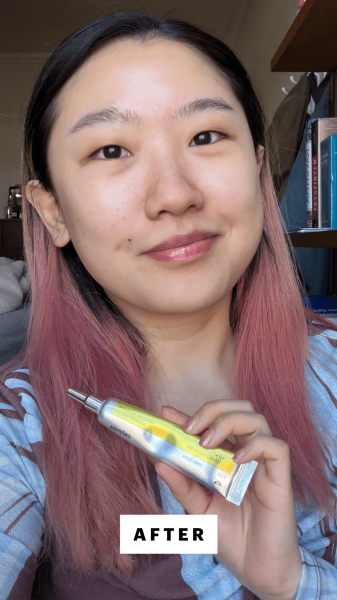
Han after applying the Celimax The Vita A Retinal Shot Tightening Booster
Sarah Han
Tester feedback from commerce editor Sarah Han
LargeChevron
“I know spicules are not for everyone—I don't necessarily gravitate towards formulas with them, but I don't mind a teensy bit of spice. (It doesn't actually hurt, but there is some tingling!) Do they actually penetrate better? Unclear. But, for a booster formula in a smaller tube that I reserve for my forehead (where expression lines are popping up) and around my eyes, I'd like to believe it doesn't hurt. I will even layer this underneath another retinol or retinal serum (like the IOPE serum further down this list!), since I'm concentrating this in my most concerning areas. As someone who doesn't partake in Botox and the like, this is my main line of defense against signs of aging.” —Sarah Han, commerce editor
More to know
LargeChevron
- Retinoid percentage: 0.1% retinal
- Other key ingredients: niacinamide, panthenol, lecithin, peptides
- Fragrance-free: yes
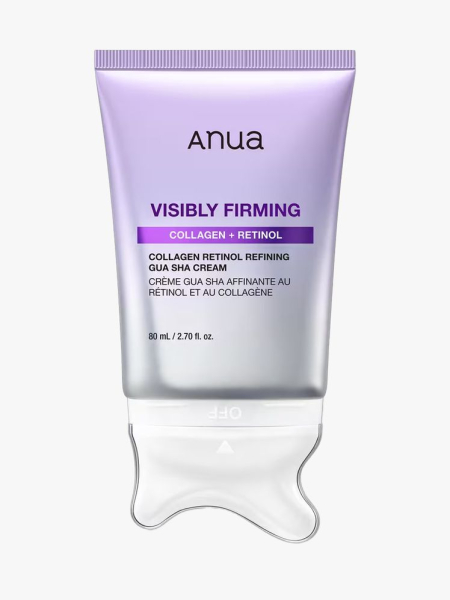
Best Face Cream: Anua Collagen Retinol Refining Gua Sha Cream
 Save to wishlist
Anua
Collagen Retinol Refining Gua Sha Cream
Amazon
Ulta Beauty
Yesstyle
Why it’s worth it: Part face cream, part sculpting tool, Anua’s Collagen Retinol Refining Gua Sha Cream turns your skin-care routine into a mini at-home facial. The formula uses retinol buffered by moisturizing ingredients such as squalane, cholesterol, panthenol, macadamia seed oil, and hydrolyzed collagen, alongside niacinamide for added brightening benefits.
But the real star is the attached gua sha-style applicator, which has a thin metal edge for an extra cooling effect as it glides across the skin and delivers a massage that feels especially nice along puffy jawlines and cheekbones. The W-shaped design hugs the contours of the face and neck surprisingly well, providing a more sculpted finish. You can also squeeze the cream onto your fingertips and use it like a traditional moisturizer for quicker application.
Allure contributing commerce writer Christa Joanna Lee applying the Anua Collagen Retinol Refining Gua Sha Cream
Christa Joanna Lee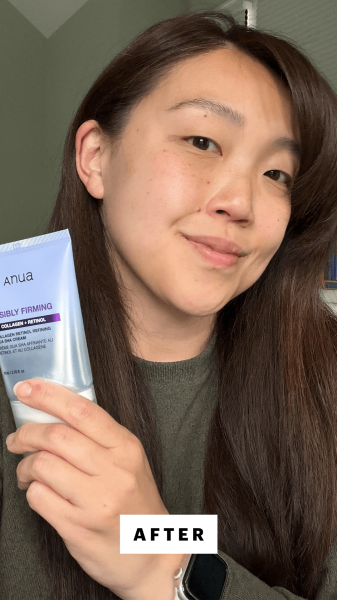
Lee after applying the Anua Collagen Retinol Refining Gua Sha Cream
Christa Joanna Lee
Tester feedback from contributing commerce writer Christa Joanna Lee
LargeChevron
“Soooo this is kind of genius? I haven’t seen many skin-care products that build the gua sha into the packaging itself, and as someone who’s constantly misplacing those little tools, I appreciate how the Anua Collagen Retinol Refining Gua Sha Cream really multitasks. There’s definitely a slight learning curve with figuring out how much product to squeeze out—too little and the applicator drags, too much and you’re massaging forever—but once I got the hang of it, the curved tool fit so nicely along my jawline and cheekbones. The massage feels genuinely relaxing and depuffing, though fair warning: You absolutely need to wipe off the applicator after each use to prevent product buildup." —Christa Joanna Lee, contributing commerce writer
More to know
LargeChevron
- Retinoid percentage: encapsulated retinol (percentage undisclosed)
- Other key ingredients: squalane, cholesterol, panthenol, macadamia seed oil, hydrolyzed collagen
- Fragrance-free: yes
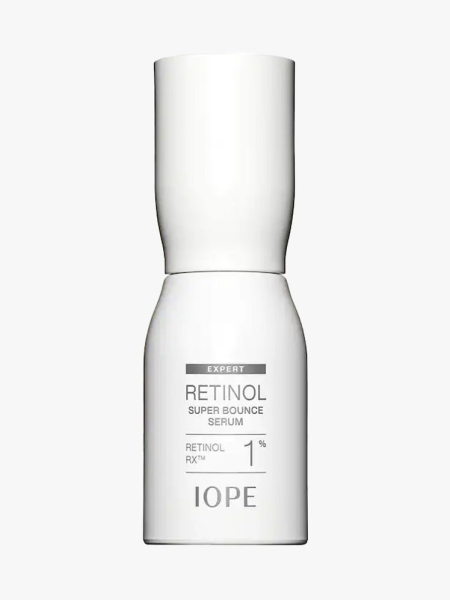
Best Serum: IOPE Expert Retinol Rx 1% Super Bounce Serum
 Save to wishlist
IOPE
Expert Retinol Rx 1% Super Bounce Serum
Amazon
Sephora
Soko Glam
Why it’s worth it: Some brands launch a retinol serum just to check a buzzword box. IOPE (which is owned by K-beauty giant Amorepacific), meanwhile, has spent decades refining its retinoid technology. Inspired by the skin-tightening effects of in-office radio frequency treatments—which use controlled heat to stimulate collagen production deep within the skin—its Expert Retinol RX 1% Super Bounce Serum takes a similar approach by focusing on deep absorption and collagen support to improve firmness, elasticity, and overall skin bounce.
Instead of relying on a single retinoid, the formula stacks four different types—pure retinol, encapsulated retinol, Granactive Retinoid (a.k.a. HPR), and Bio-Seletinoid (the brand’s proprietary synthetic retinoid)—to target signs of aging from multiple angles. The encapsulated retinol slows the release of the active ingredient to buffer against irritation, while soothing cypress leaf extract and Lactobacillus ferment calm redness and support the skin barrier along the way. In other words, it’s potent, but doesn’t leave your face feeling like it just went through an actual laser treatment.
Allure commerce editor Sarah Han applying the Iope Expert Retinol RX 1% Super Bounce Serum
Sarah Han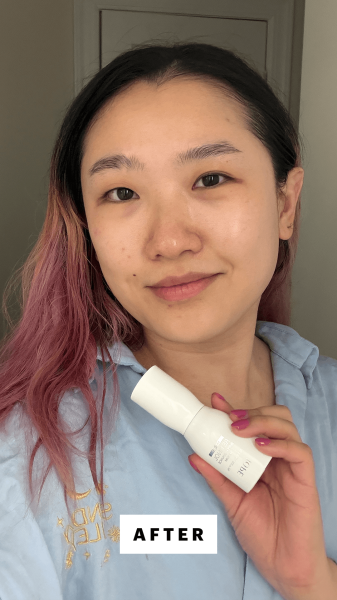
Han after applying the Iope Expert Retinol RX 1% Super Bounce Serum
Sarah Han
Tester feedback from Han
LargeChevron
“Now that I’m 33, I use a retinol serum almost every night to keep signs of aging at arm’s length. More times than not, I reach for IOPE’s extra-silky, extra-melty Retinol Bounce, which leaves my skin looking noticeably plumper after the fact—and well into the next morning. I haven’t had any purging episodes, even after I return to Retinol Bounce after testing other brands (the life of a beauty editor, eh!).” —Sarah Han, commerce editor
More to know
LargeChevron
- Retinoid percentage: 1% retinol complex (pure retinol, encapsulated retinol, Granactive Retinoid, and Bio-Seletinoid)
- Other key ingredients: Lactobacillus ferment, cypress leaf
- Fragrance-free: yes
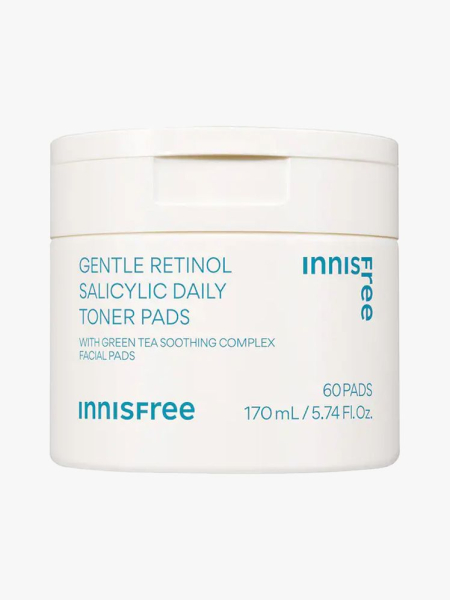
Best Toner Pads: Innisfree Daily Gentle Retinol Salicylic Toner Pads
 Save to wishlist
Innisfree
Daily Gentle Retinol Salicylic Toner Pads
Amazon
Sephora
Contributing commerce writer Christa Joanna Lee applying Innisfree Gentle Retinol Salicylic Daily Toner Pads
Christa Joanna Lee
Why it’s worth it: Innisfree’s Daily Gentle Retinol Salicylic Toner Pads confirms what we already suspected: Boy, do Koreans love a toner pad. Not only are toner pads convenient as quick exfoliating wipes, but in Korea, they’re also used as mini sheet masks, makeup prep, midday skin refreshers, and even body treatments for issues like back acne. “For acne-prone skin, I like that these contain two ingredients that can be especially useful for breakouts: salicylic acid and retinol,” says Sarah Sheu, MD, a board-certified dermatologist based in Maple Valley, Washington. “Salicylic acid is oil-soluble, so it can penetrate pores and reduce buildup that contributes to acne, while retinol regulates skin cell turnover.”
But true to K-beauty form, the formula doesn’t stop at actives: Green tea, cica, allantoin, ceramides, and squalane cushion skin and support the barrier, keeping it balanced rather than stripped.
Tester feedback from Lee
LargeChevron
“I’ve been a fan of Innisfree’s Green Tea Enzyme Vitamin C Toner Pads for a while—they’re gentle yet brightening, and pair perfectly with my morning SPF routine. The K-beauty brand is well known for its sensitive skin-friendly formulas, so I knew the Gentle Retinol Salicylic Daily Toner Pads wouldn't freak out my skin. These retinol pads were (believe it or not) my first foray into retinol, and after two weeks of nightly use, I noticed my skin texture start to smooth out. Even though I don’t deal with breakouts, the combo of gentle retinol and salicylic acid made a visible difference in softer, more even skin.” —Christa Joanna Lee, contributing commerce writer
Tester feedback from beauty director Sarah Kinonen
LargeChevron
“For at least half my life, I’ve had acne. Big blackheads, inflamed pimples, and those one-of-a-kind, special-event cystic zits—I’ve seen (and had) it all! Nowadays, though, I’ve got things under control and rarely experience the pustules of my past. If I did, though, I’d probably reach for a daily treatment that is potent enough to kick pimples to the curb (and prevent them from forming in the first place), but also gentle enough not to disturb my sensitive skin. It’s a big ask, I know! The Innisfree Gentle Retinol Salicylic Daily Toner Pads certainly meet the criteria—no wonder my coworkers love them. Designed for daily use, these potent pads are packed with powerhouse ingredients, like retinol and salicylic acid, that exfoliate and help deep-clean pores. The soothing bit of the treatment comes from anti-inflammatory green tea, calming Centella asiatica extract, and moisturizing allantoin.” —Sarah Kinonen, beauty director
More to know
LargeChevron
- Retinoid percentage: retinol (percentage undisclosed)
- Other key ingredients: salicylic acid, green tea, cica, allantoin, hyaluronic acid, niacinamide
- Fragrance-free: yes
Best Undereye Patches: Mediheal Retinol Collagen Eye Ampoule Patch
 Save to wishlist
Mediheal
Retinol Collagen Eye Ampoule Patch
Amazon
Nordstrom
Ulta Beauty
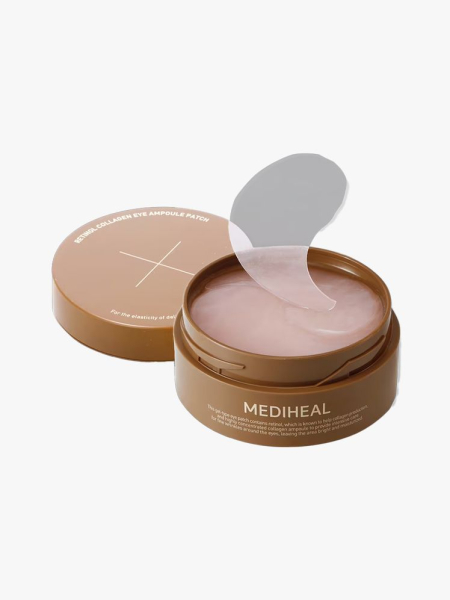
Why it’s worth it: Eye patches and eye creams basically have the same end-goals—hydrate, smooth, brighten, de-puff—but the real difference comes down to occlusion. Undereye masks like Mediheal’s Retinol Collagen Eye Ampoule Patches physically seal ingredients to the skin, helping to prevent moisture from evaporating and encouraging those ingredients to absorb more effectively. In this case, that includes retinol to soften fine lines, niacinamide and glutathione to brighten dark spots, plus multiple forms of collagen, sodium hyaluronate, and glycerin to flood the area with hydration.
Fair warning: These patches are soaked in serum and a little slippery to grab, but that juicy essence is exactly what gives them that satisfying, ultra-hydrating feel. Also, they do contain fragrance, so if your eye area is reactive, patch-testing (pun intended) first is the best move.
More to know
LargeChevron
- Retinoid percentage: retinol (percentage undisclosed)
- Other key ingredients: niacinamide, glutathione, collagen, sodium hyaluronate
- Fragrance-free: no
Best Eye Cream: Medicube PDRN Pink Peptide Eye Cream
 Save to wishlist
Medicube
PDRN Pink Peptide Eye Cream
Amazon
Nordstrom
Ulta Beauty
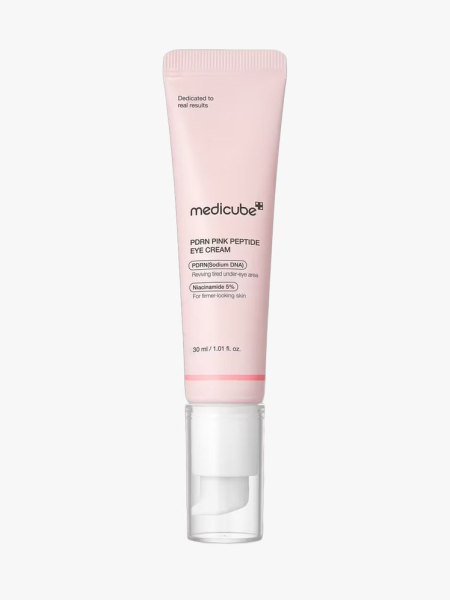
Why it’s worth it: Medicube’s PDRN Pink Peptide Eye Cream does a little bit of everything: “Its multitasking formula combines salmon-derived PDRN with peptides, niacinamide, and retinol to support elasticity and skin firmness, improve the look of fine lines, and even out tone,” Y. Claire Chang, MD, a board-certified dermatologist based in New York City, told Allure. (Notably, retinol appears fairly low on the ingredient list, so it’s likely included at a gentler level that’s better suited for the delicate eye area.)
Meanwhile, glycerin and multiple forms of hyaluronic acid keep the formula feeling plush and hydrating, while caffeine, turmeric, and coffee seed extract soften the look of dark circles and wake up tired-looking under-eyes. And yes, the signature millennial-pink hue of the formula is mostly there for aesthetics, but if a cute pastel eye cream makes us actually remember to apply it consistently every day, who are we to argue with the strategy?
More to know
LargeChevron
- Retinoid percentage: retinol (percentage undisclosed)
- Other key ingredients: peptides, niacinamide, hyaluronic acid, turmeric, mandarin peel
- Fragrance-free: yes
Best for Advanced Users: Dr. Reju-All Advanced Retino-Mela Serum HPR Retinol Serum
 Save to wishlist
Dr. Reju-All
Advanced Retino-Mela Serum HPR Retinol Serum
Amazon
Yesstyle
Stylevana
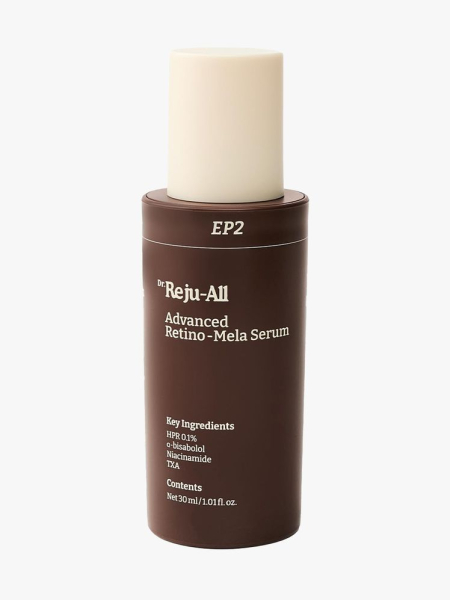
Why it’s worth it: A retinoid that aims to deliver prescription tretinoin-adjacent benefits, but with a gentler learning curve? It sounds almost too good to be true. Enter HPR (short for hydroxypinacolone retinoate), a newer-generation retinoid—and star ingredient in Dr. Reju-All’s Advanced Retino-Mela Serum HPR Retinol Serum—that’s structurally similar to retinoic acid and “can bind directly to retinoid receptors, bypassing conversion steps,” says Dr. Yoo. “That means it may offer retinoid-like benefits with less irritation, which aligns well with the K-beauty emphasis on gentle, long-term use.” Another perk: HPR is also considered more stable than traditional retinol, which can break down relatively easily when exposed to light and air. In practical terms, that added stability may help the formula maintain its potency for longer.
Alongside the HPR, the serum also tackles discoloration (the “Mela” in the name) with a multitasking blend of brightening ingredients: 10% niacinamide helps block melanin transfer, while 4% tranexamic acid and α-bisabolol—a calming ingredient derived from chamomile—interrupt melanin production itself. Heads up: Dr. Yoo notes that while HPR is a “promising option and becoming increasingly popular in K-beauty,” research on HPR remains more limited than that on traditional retinoids like retinol or tretinoin.
More to know
LargeChevron
- Retinoid percentage: hydroxypinacolone retinoate (percentage undisclosed)
- Other key ingredients: 10% niacinamide, 4% tranexamic acid
- Fragrance-free: yes
Best Face Mask: Sungboon Editor Deep Collagen Retinol Power Boosting Pad
 Save to wishlist
Sungboon Editor
Deep Collagen Retinol Power Boosting Pad
Amazon
Ulta Beauty
Yesstyle
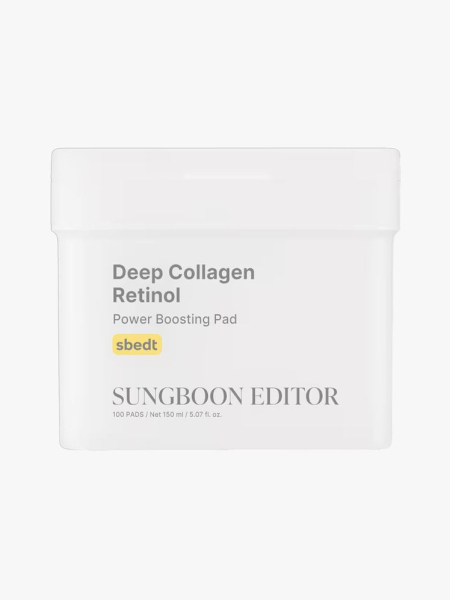
Why it's worth it: Sungboon Editor’s Deep Collagen Retinol Power Boosting Pads sit somewhere between a toner pad and a sheet mask. Like classic Korean toner pads, they come pre-soaked in essence, so you can swipe them across skin or leave them on for a few minutes like mini masks. And the gauzy, ultra-stretchy material helps the retinol-infused formula hug trickier areas a traditional sheet mask tends to miss—think the jawline, neck, and around the mouth.
Ingredient-wise, the formula checks all the boxes for that plump, glass-skin look: Hydrolyzed collagen, multiple forms of hyaluronic acid, glycerin, and betaine flood skin with hydration, while Centella asiatica and its soothing components (madecassoside, asiatic acid, and asiaticoside) calm redness and support the barrier. “Targeting wrinkles, fine lines, and sagging skin, it's my go-to when I need to look refreshed and lifted for important meetings or events,” says Sarah Chung Park, creator of K-Beauty World at Ulta Beauty based in Los Angeles.
More to know
LargeChevron
- Count: 100
- Retinoid percentage: retinol (percentage undisclosed)
- Other key ingredients: hydrolyzed collagen, hyaluronic acid, glycerin, betaine, Centella asiatica
- Fragrance-free: yes
Frequently Asked Questions
What’s the most common form of retinol in K-beauty?
The most common retinol forms you’ll see in Korean beauty products are actually a mix of classic retinol plus gentler or more stable vitamin A derivatives. The big ones are:
- Retinol: Especially around the 0.1% mark
- Retinal (retinaldehyde): Increasingly popular in newer K-beauty launches because it works faster than retinol while still being available OTC
- Bakuchiol: A plant-based retinol alternative that’s sometimes paired with retinol to gently boost efficacy
- Hydroxypinacolone retinoate (HPR): A newer-gen retinoid sometimes called “granactive retinoid.” HPR can interact directly with retinoid receptors, without the conversion steps required by traditional retinol. That said, compared to classic retinoids, research on HPR is still relatively limited
- Retinyl palmitate: A milder vitamin A derivative (goes through three conversion steps in the skin before it becomes retinoic acid) that shows up in beginner-friendly or sensitive-skin products
What’s especially common in K-beauty isn’t just the retinoid ingredient itself, but the way it’s formulated: Many products use encapsulated retinol, liposome delivery systems, slow-release technology, or “micro-dose” approaches designed to minimize irritation. They’re also frequently buffered with barrier-supporting ingredients like “cica, ceramides, panthenol, heartleaf, and peptides” to keep skin hydrated, says Dr. Yoo.
If a product doesn’t list a retinol percentage, how can you tell how strong it is?
If your Korean skin-care products don’t list the retinol percentage, the best clue is usually the type of retinoid it contains. “It can be difficult to know the exact strength without knowing the actual percentage,” says Dr. Yoo. “However, you can get a sense by knowing the type or form of retinoid.” Generally speaking, retinyl esters are considered the weakest and gentlest, followed by retinol (the most common OTC option), then retinal/retinaldehyde, which tends to work faster and hit harder. Prescription-strength tretinoin and adapalene sit at the more potent end of the spectrum, while HPR (hydroxypinacolone retinoate) is often marketed as powerful but still lacks as much comparative research.
Dr. Yoo also points out that formulation matters just as much as the ingredient itself: A milder retinoid in a lightweight gel serum may end up feeling stronger than a more potent retinoid suspended in a rich cream. In other words, strength isn’t just about the percentage—it’s also about the delivery system, texture, and what the formula is combined with.
Do you still need sunscreen in the morning with Korean retinol?
Even if your Korean retinol feels gentler or more barrier-friendly than traditional retinoids, sunscreen is still non-negotiable the next morning (regardless of its origin). “Retinoids increase cell turnover, and this makes the skin more vulnerable to UV damage,” says Dr. Yoo. In other words, all that overnight work your retinol is doing to help soften fine lines, smooth skin texture, and even out skin tone can quickly backfire if skin isn’t protected from the sun during the day. Translation: Your retinol and sunscreen are a package deal.
Meet the experts
- Sarah Chung Park, founder and CEO of beauty distributor Landing International and creator of K-Beauty World at Ulta Beauty based in Los Angeles
- Sarah Sheu, MD, a board-certified dermatologist at Valley Medical Center based in Maple Valley, Washington
- Jane Yoo, MD, a dual board-certified dermatologist and Mohs surgeon based in New York City
How we test and review products
When Allure tests a product, our editors look at it from every angle in an effort to best serve you. We review ingredients, scrutinize brand claims, and, when necessary, examine peer-reviewed scientific and medical studies. In addition to testing each and every product that's included in each and every review, we rely on experts who shape their fields, including dermatology, cosmetic chemistry, and medicine, to help us vet the ingredients and formulas.
For our list of the best Korean retinol products, we considered each product's performance across five primary categories: product ingredients and efficacy, packaging, fragrance, texture, and product wear. Every product was determined to have excelled in each category by our editorial team, which is composed of in-house writers and editors as well as contributors—along with special consideration from board-certified dermatologists. To learn more information on our reporting and testing processes, read our complete reviews process and methodology page.
Our staff and testers
A beauty product is a personal purchase. You might be searching for a face cream to address persistent dryness or a new nail product to add to your Sunday self-care routine; you may simply be browsing around for the latest launches to hit the hair market. No matter what you seek or your individual needs and concerns, Allure wants to ensure that you love anything we recommend in our stories. We believe that having a diverse team of writers and editors—in addition to the wide range of outside testers and industry experts we regularly call upon—is essential to reaching that goal.
After all, can we really say a skin-care product is the "best" for people over 50 if the only testers we've solicited opinions from folks who have yet to hit 30? Can we honestly deem a high-end diffuser worthy of your hard-earned cash if it’s never been tested on curls? We're proud that our staff spans a wide range of ages, skin tones, hair textures, genders, and backgrounds, which means that we are able to fairly assess any beauty product that comes into the beauty closet.



Leave a Reply